Bathroom remodeling + tile
Bathroom Remodeling Houston
Houston bathroom remodeling with showers, tile, vanities, drywall, moisture-conscious materials and coordinated finish work.
Bathrooms punish shortcuts
Water finds weak joints. Steam exposes the wrong paint. A shower that looks finished can still fail behind the tile if preparation and waterproofing were treated as invisible extras. OilerBilt approaches Houston bathroom remodeling from the substrate out, then coordinates the tile, fixtures, drywall and paint you see.
The first conversation is about what is not working: a leaking surround, cracked grout, poor storage, a hard-to-clean layout, damaged drywall, or finishes that have reached the end of their useful life. Keeping plumbing in place can reduce cost and disruption. Moving it may be worth it when the existing arrangement is genuinely impractical.
Moisture-resistant materials are part of a system
Mold-resistant board can be useful in damp locations, but one product does not replace ventilation, waterproofing or correct transitions. Shower walls, bathroom ceilings and vanity areas face different exposure. The assembly should match the location.
Gulf Coast humidity makes bathroom exhaust and paint selection especially important. A fan that does not vent effectively leaves moisture on ceilings and walls. High-sheen paint is not the only answer; surface preparation and a coating rated for the environment matter.
Tile and existing conditions
Large-format tile, mosaics and patterned layouts each demand different preparation. Flatness, drain position, niche dimensions and edge details affect the finished look. Tile selection should happen before the final scope because the material changes layout, labor and trim decisions.
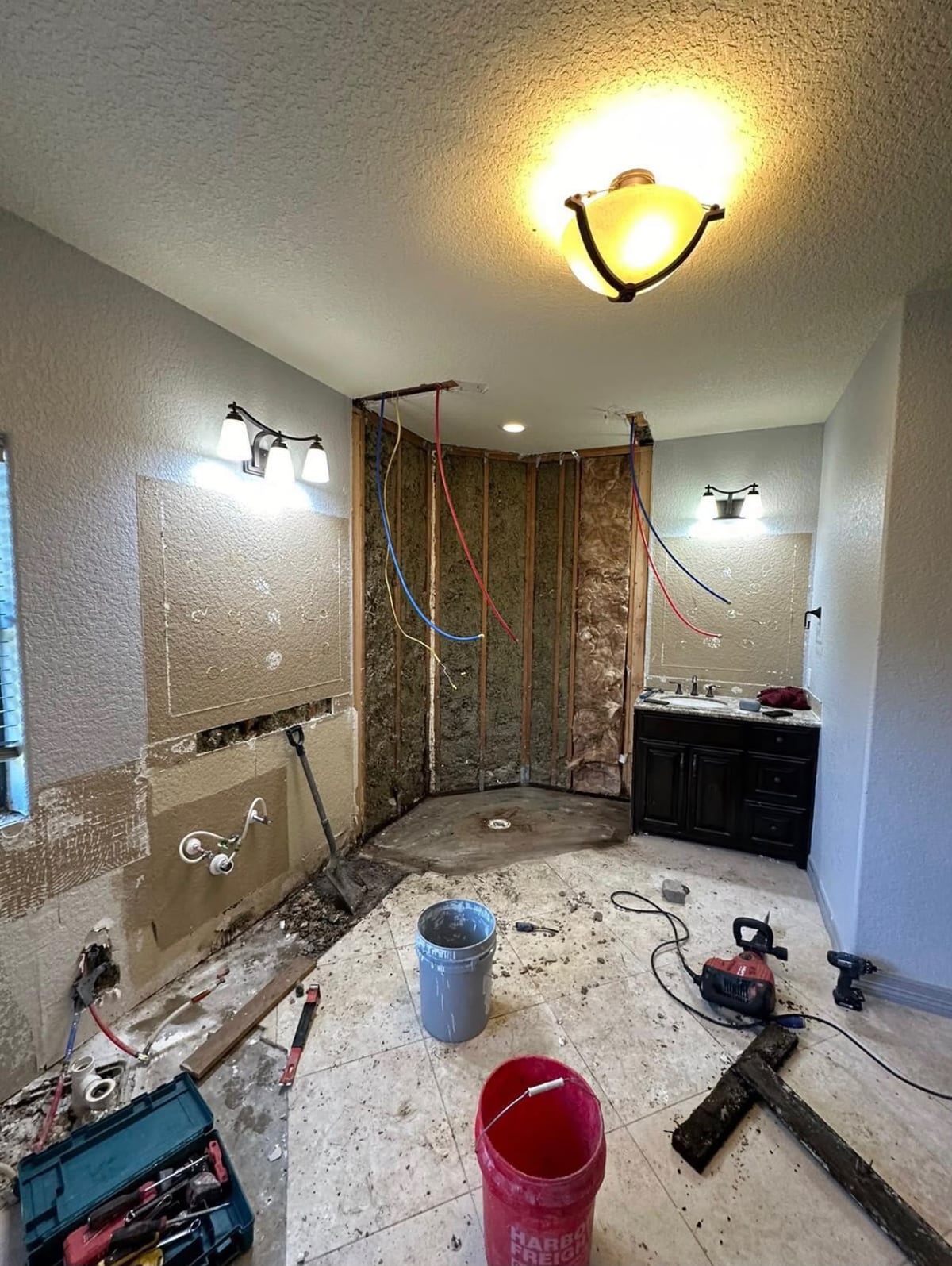
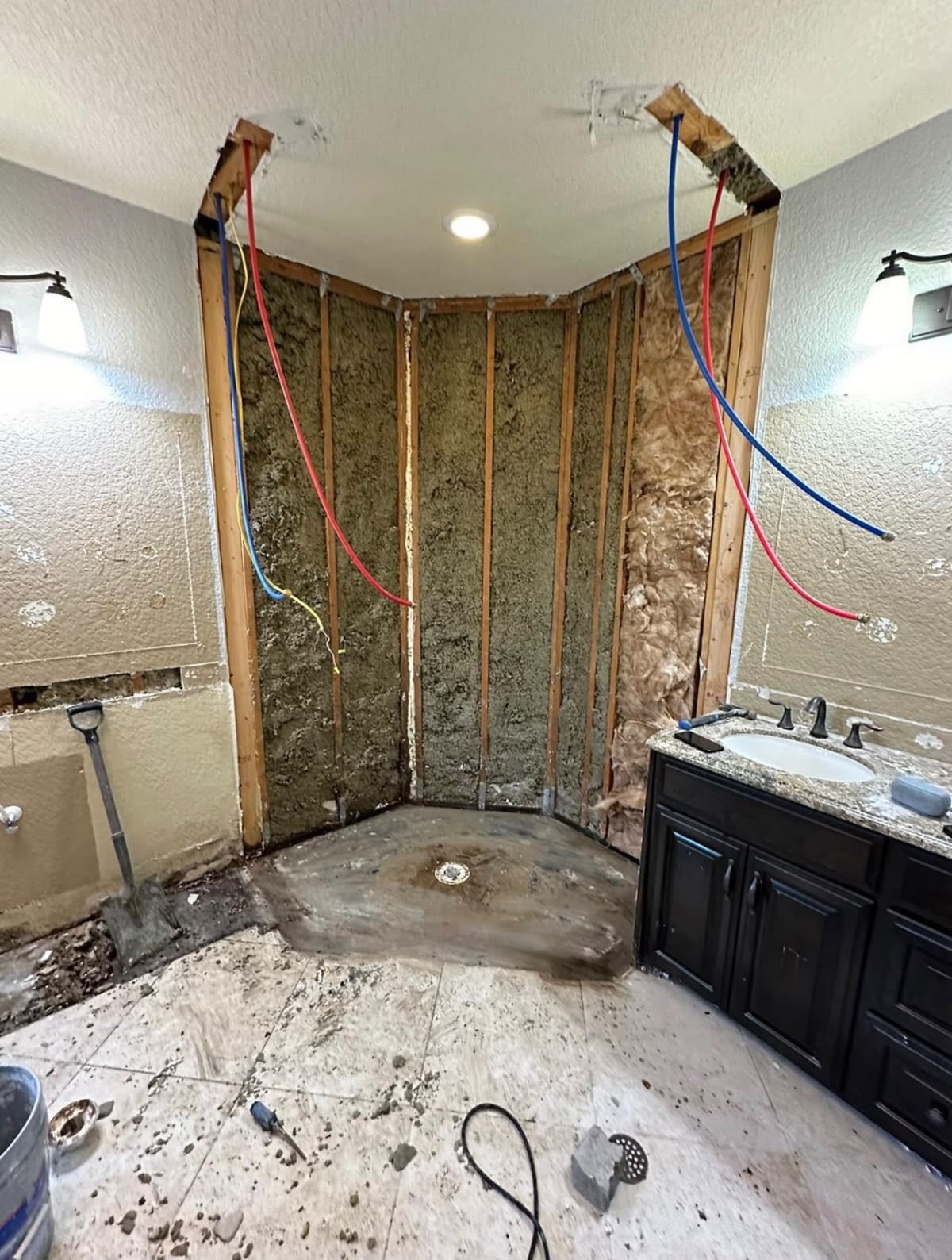
Removing an older shower can reveal damaged backing, plumbing repairs or framing that needs attention. We do not bury an unknown condition to protect an early estimate. The affected area is documented and the next step is discussed before work continues.
Southwest Houston homes
Many bathrooms in Alief, Mission Bend, Sugar Land and Missouri City date to periods when cultured-marble surrounds, small-format floor tile and boxed fluorescent lighting were common. Updating them often involves more than swapping fixtures: wall repair, uneven substrates and old ventilation need to be considered at the same time.
Permits and trade work
Replacing finishes is different from relocating drains, adding circuits or changing structure. Requirements depend on scope and whether the address falls inside a municipality or unincorporated Harris County. We confirm the jurisdiction rather than treating “Houston” as one permitting office.
Working in an occupied Houston property
Most remodeling happens while somebody still lives or works in the building. Before the start date, we identify the route into the work area, where tools and material can be staged, which rooms need protection, and when water or power could be interrupted. Pets, children, customer traffic and home-office schedules belong in that conversation. Containment reduces dust, but it does not make demolition silent or erase every inconvenience.
Material decisions also need a cutoff. A late change to tile, paint, fixtures or layout can affect lead time, preparation and work already completed. When the requested scope changes, the added or removed work should be described before it proceeds. The same applies to a concealed condition discovered after a wall, cabinet or finish comes out. We pause at the affected area, show what is visible and discuss the practical options rather than quietly covering it or surprising the customer at closeout.
Cleanup, punch lists and warranty questions
Daily cleanup and final cleanup are different. During active work, the goal is to keep paths usable, control debris and leave the work zone in a reasonable condition for the stage of construction. Final cleanup follows the last sanding, coating or installation work. The estimate should make clear what protection, hauling and disposal are included, especially when access is tight or heavy material must move through an occupied space.
A final walkthrough checks the agreed scope at normal viewing distance and under the room’s typical light. Touchups and incomplete items go on a punch list with a clear path to completion. Warranty language is not published on this site because it has not yet been confirmed by the client. Ask about the warranty that applies to the specific work and materials in your estimate; manufacturer coverage and contractor workmanship coverage are not automatically the same thing.
Houston weather can affect schedules. Exterior coatings, stone work and any repair that depends on dry conditions should not be forced through a rain or humidity window simply to protect a date. Interior work after a leak also needs the cavity to be dry before it closes. A realistic schedule accounts for those conditions, required inspections and material availability instead of promising a finish date before the project has been seen.